Today, on the Day of the Disappeared in Spain, we pause to honour the memory of those who lost their lives trying to cross a border, and to recognise the families who, through their grief, have never stopped searching, demanding and resisting.
People on the move see their rights violated at every stage of migration processes. These violations can go unpunished, or they can be restored and repaired. At Caminando Fronteras, we accompany migrant communities and the families of victims in these processes of turning pain into justice, convinced that memory is also a form of political action.
In this context, on 5, 6 and 7 March we took part in the event “En su nombre: creación compartida para afrontar la ausencia” (“In their name: shared creation to face absence”), organised by the QSD Global Foundation in Córdoba. Three days dedicated to making absence visible, naming those who are no longer here, and accompanying those who are still searching for them.
6 March was the most important day. At eleven in the morning, 33 families took part in a collective installation: each family member came with a personal object belonging to their disappeared loved one, told their story, and placed the object in a box. The boxes gradually formed a wall of memory — a collective construction made of absences and love, accompanied by a text by writer Inmaculada Chacón and live music.
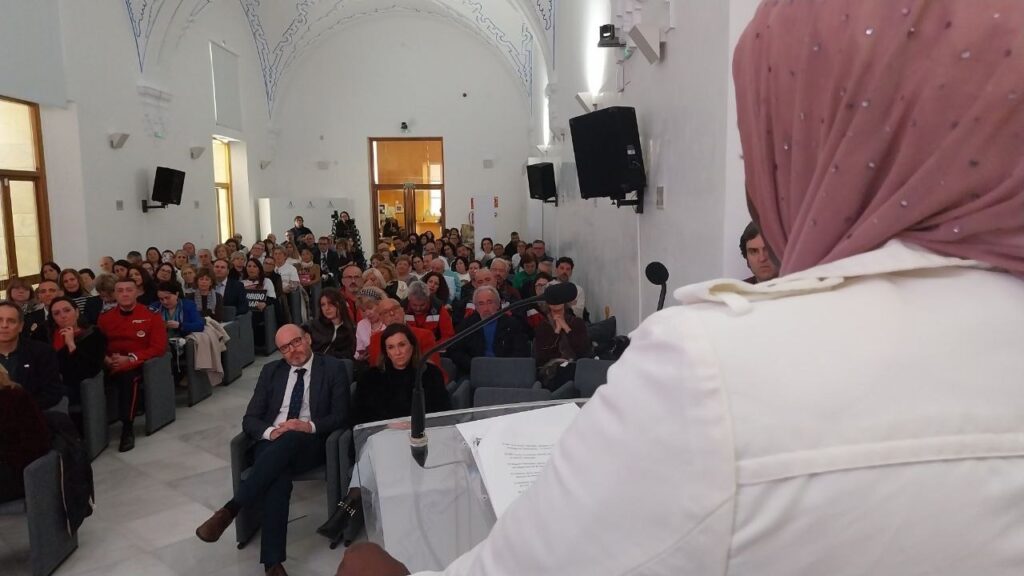
Among the 33 families present, two are families we accompany at Caminando Fronteras: families living in Madrid and Seville, of Malian and Moroccan origin, whose relatives disappeared on the Canary Island route, trying to reach El Hierro and Lanzarote. They are our neighbours. People who live among us and carry the weight of absence and uncertainty every single day.
In the afternoon, these families were received by senior officials from the National Centre for Missing Persons, under the Ministry of the Interior. The meeting was held behind closed doors, with family members only, as befits a space of listening and recognition. They were able to share their stories and their demands.
We want to recognise the role of searching families, because without them injustices would fall into oblivion. These are families living in Spain, who are part of our communities, and who demand what any family has the right to demand: to know what happened, to find their loved ones, to receive justice and guarantees that the search will continue. Their struggle is not separate from ours — it is ours.
Today, on this day of memory, we renew our commitment. We will continue to accompany these processes of repair, we will continue to demand that institutions do not abandon these families, and we will continue walking alongside those who turn pain into an unyielding demand for justice.