
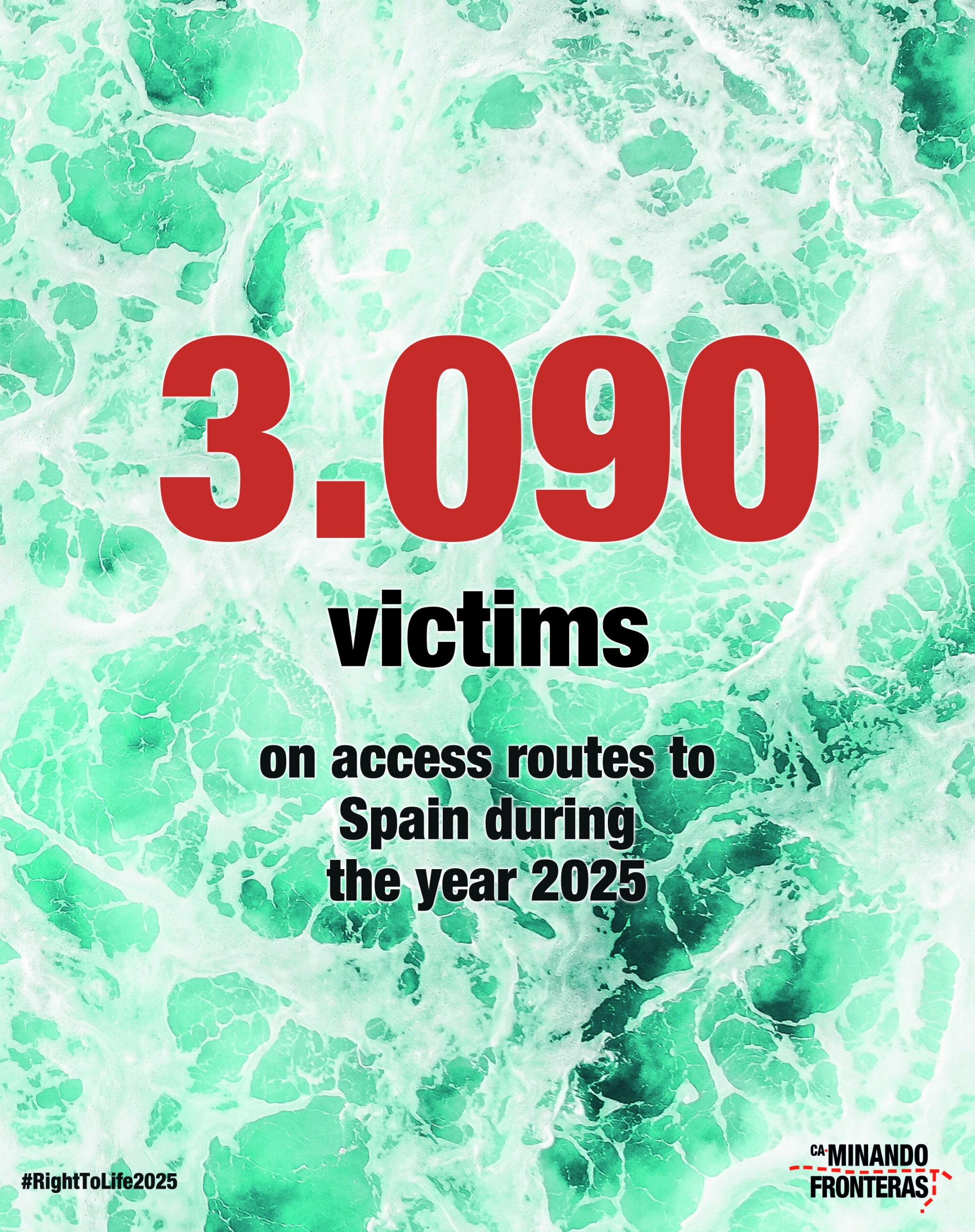

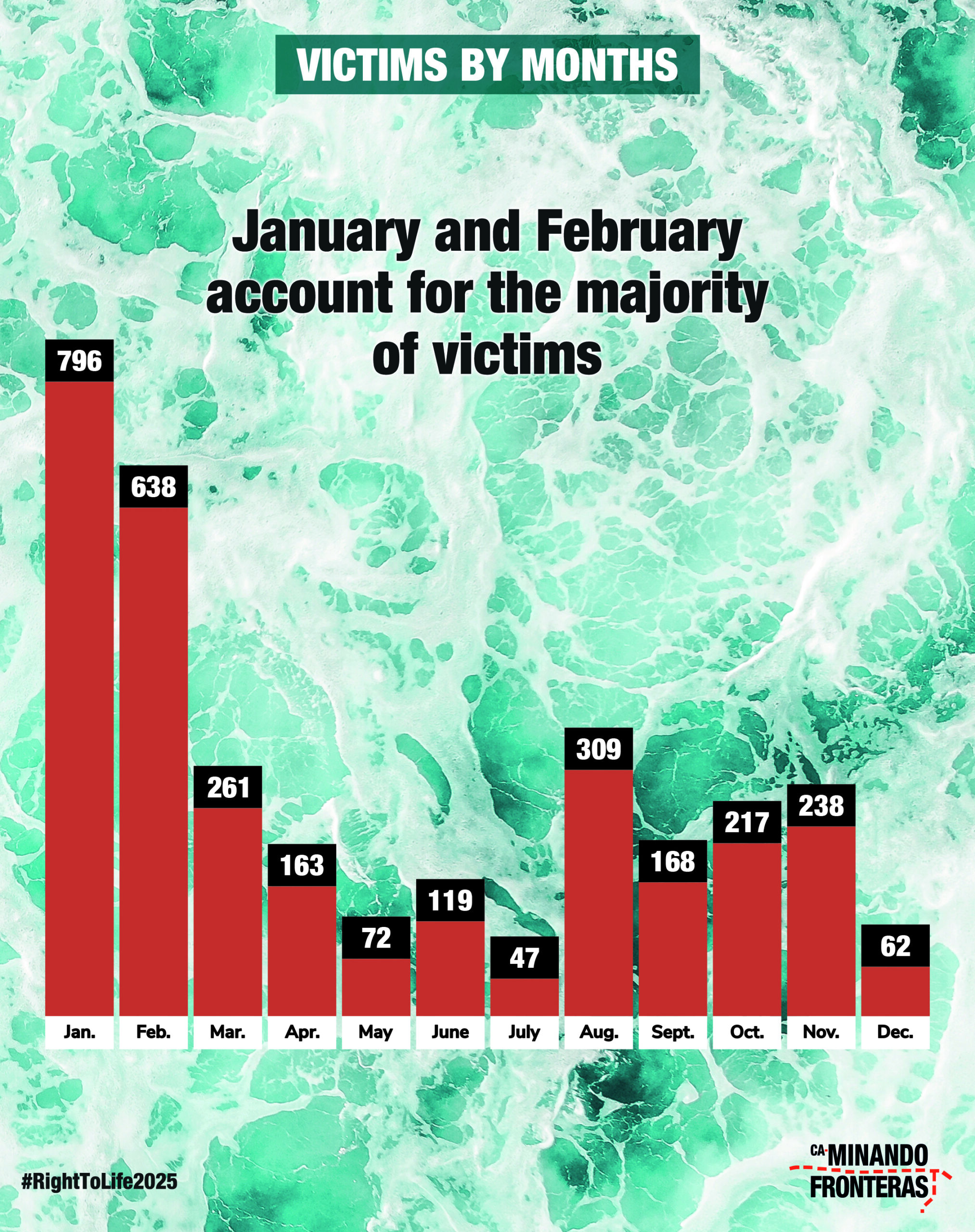
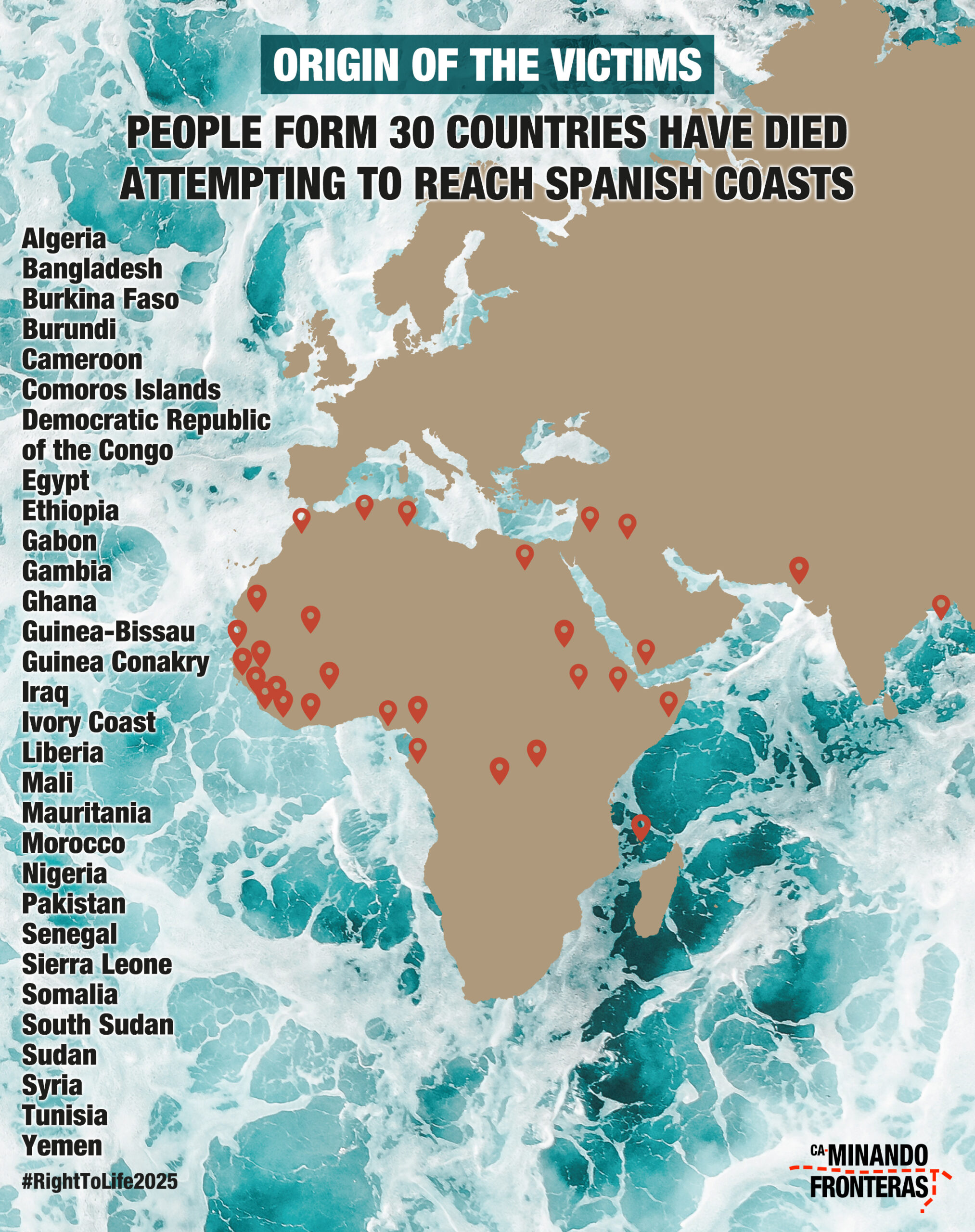
In 2025, 3,090 people lost their lives at the Spanish borders, amid an increase in the number of tragedies, the consolidation of the Algerian route and the emergence of new, longer routes such as the one departing from Guinea Conakry.
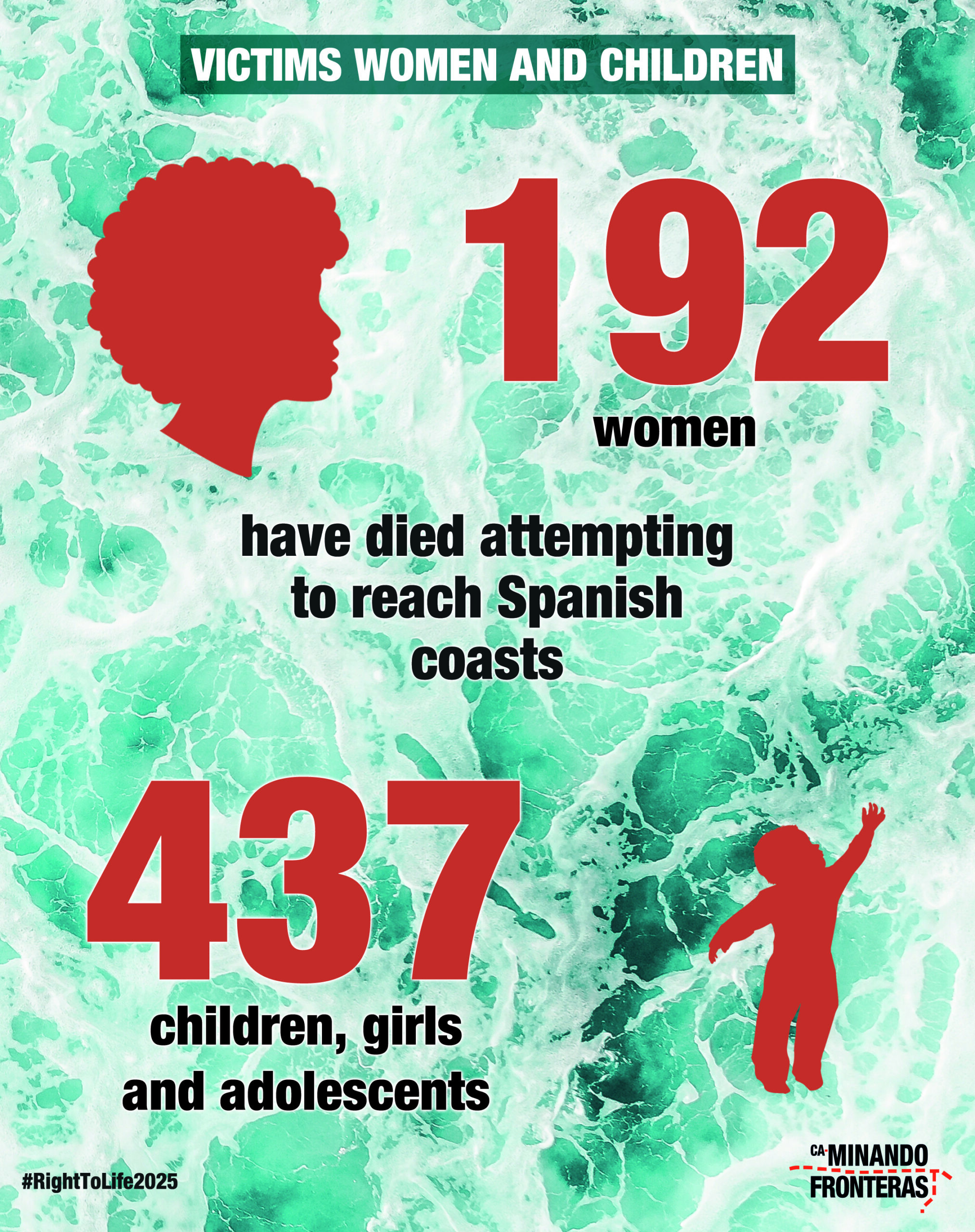
Between 1 January and 15 December 2025, 3,090 people lost their lives or disappeared during border crossings in the Western Euro-African Border region, including 192 women and 437 children and adolescents.
The comprehensive analysis of the different migratory routes documents 303 tragedies, with particular attention to 70 boats that disappeared without leaving any trace, pointing to an increase in risk and in the extreme conditions faced during these journeys.
Causes of the increase in tragedies
The rise in the number of tragedies at the borders of the Spanish State is the result of a combination of factors, including the omission of the duty to rescue, the late or non-activation of search and rescue mechanisms, and the lack of coordination among the States involved. These dynamics are further aggravated by policies of border externalisation, which shift rescue responsibilities to third countries with limited resources, as well as by the increasing harshness of migratory journeys, marked by ever longer and more dangerous routes, the use of precarious and overcrowded boats, and the late issuance of alerts, all of which directly increase the risk to life.
Border externalisation and criminalisation
There has been a sustained increase in funding to third countries aimed to stem migration, effectively expanding the border into countries of origin. These externalisation models involve financial contributions from the European Union and individual States, consolidating increasingly global and lethal mechanisms that multiply the areas in which people’s lives are at risk.
The criminalisation of migrant people serves to conceal institutional responsibility. Mechanisms that should guarantee and protect the human rights of people on the move are instead used to persecute victims, their families, and organisations defending the rights of migrant communities.
Information on the routes
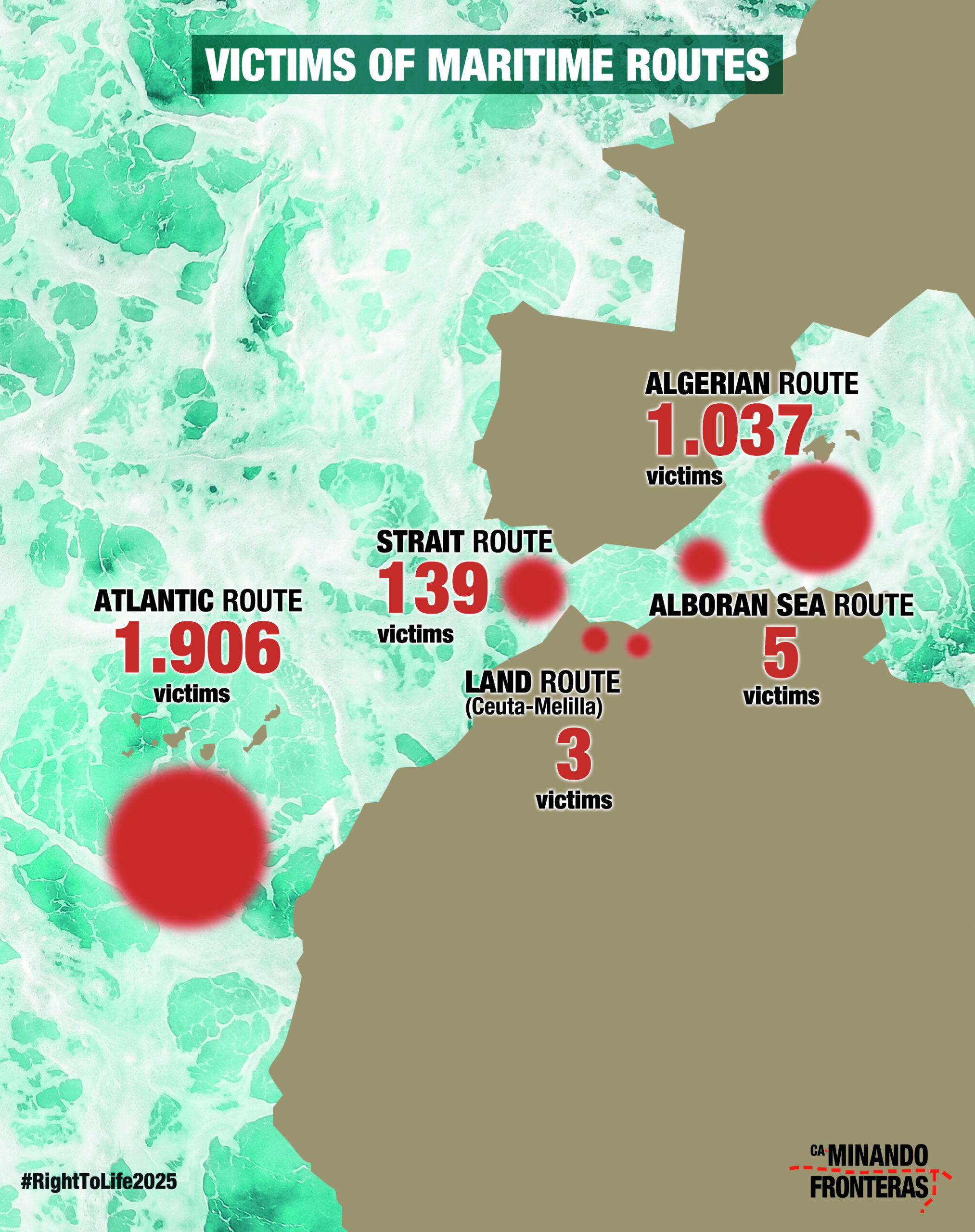
The Algerian route to the Spanish State has become the most frequently used and one of the most dangerous, surpassing the Atlantic route to the Canary Islands. Along this route, 1,037 victims were documented in 121 maritime tragedies, and the crossings towards Ibiza and Formentera stand out as particularly high-risk. These journeys are longer and more exposed, taking place in areas where the lack of proactive search and rescue operations significantly hampers life-saving responses.
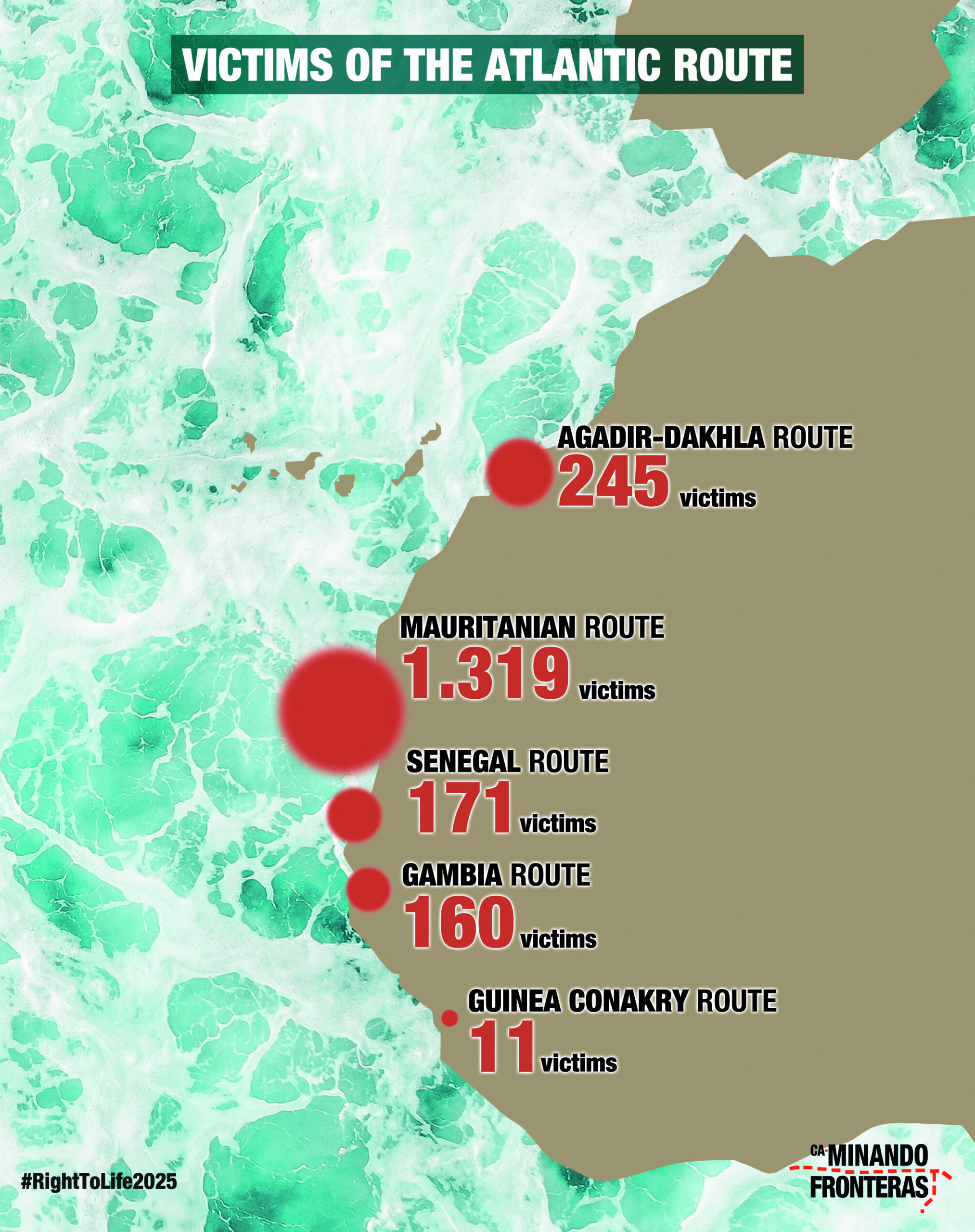
Although in 2025 there has been a decrease in arrivals along the Atlantic route to the Canary Islands, which recorded 1,906 victims, this reduction is explained by the intensification of migration control mechanisms and the externalisation of borders to third countries, rather than by any real improvement in the protection of the right to life.
In 2025, the emergence of a new route departing from Guinea Conakry must also be highlighted. This journey covers approximately 2,200 kilometres, around 750 kilometres longer than the route from Senegal, and represents an extreme-risk crossing involving more than ten days at sea in the middle of the Atlantic Ocean.
The Strait crossing has shown a significant increase in attempts to reach Spain and in the number of tragedies, with 139 victims, 24% of whom are children and adolescents.
Download the report in English here. Go to the bottom of the page for the Spanish version.