Caminando Fronteras took part in the World Social Forum alongside the Maghreb-Sahel Migrations Network (RMSM), under the partnership of CCFD-Terre Solidaire, contributing our voice and our experience supporting searching families and monitoring human rights violations at the borders.
The World Social Forum is an international meeting space for social movements, organisations and activists from around the world who, since 2001, have come together to debate alternatives to global injustice and collectively build another possible world. Its 2026 edition was held from 6 to 8 August in Cotonou, Benin, bringing together civil society organisations from different continents under the theme “another world is possible.”
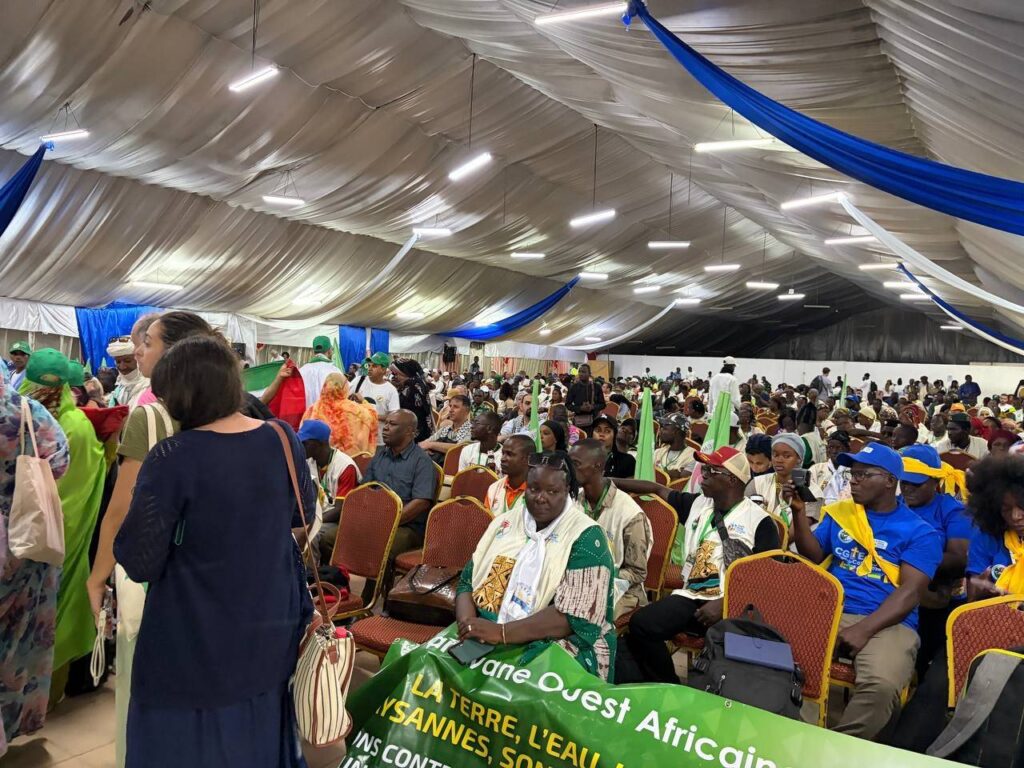
As part of the activities on migration and social justice, we led a transnational workshop on good practices in the fight for the rights of border victims and their families, with the participation of organisations from Senegal, Mauritania, Guinea-Conakry and Tunisia.
During those days we exchanged knowledge, experiences and good practices with numerous allied organisations. Among them, we would highlight the Moroccan Association for Human Rights (AMDH), the Moroccan Association for the Assistance of Vulnerable Migrants, and the Moroccan Network of Migration Journalists (RMJM), with whom we shared knowledge, experiences and common strategies for defending the rights of migrants in the region.
We also reconnected with the Association of Family Members of the Tarajal Victims, which leads a movement fighting for truth and justice for the 14 people who lost their lives trying to swim to Tarajal beach in Ceuta, while the police forces used riot-control equipment with disproportionate force. This association continues working to uncover the truth, demand justice and reparation, and fight against impunity, while unmarked graves remain in Ceuta’s cemetery.
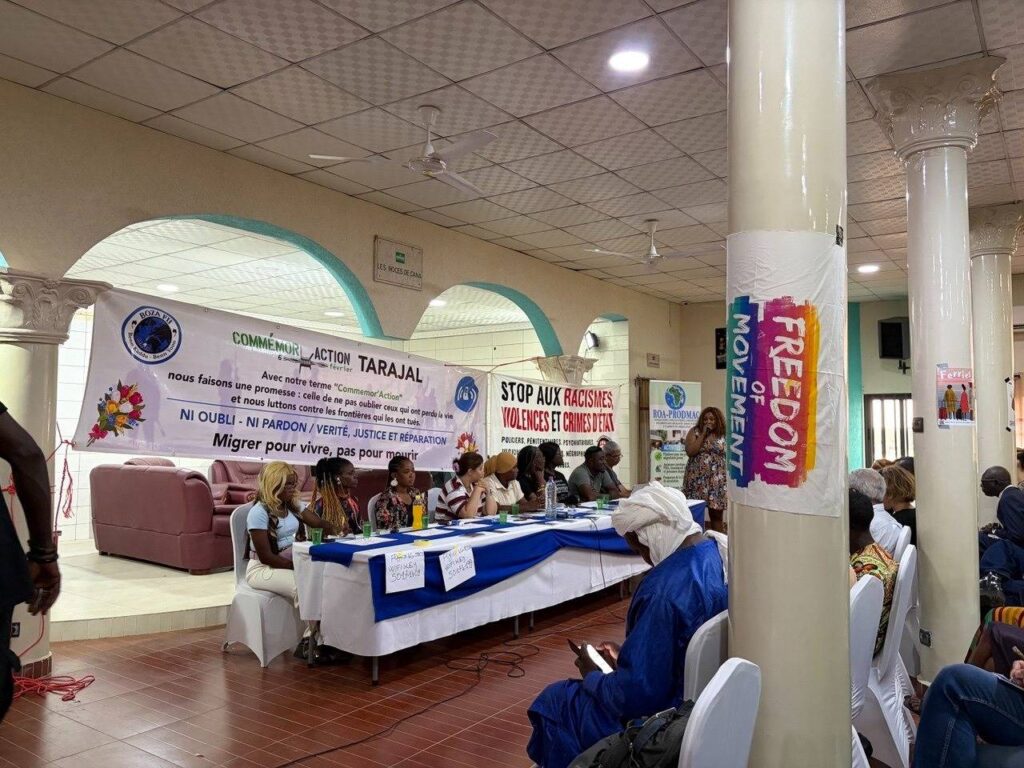
We also took part as speakers in several panel discussions, including one on the protection of the rights of searching families and another on the criminalisation of human rights defenders and searching families, among other topics.
Spaces like the World Social Forum are essential for civil society: they allow us to meet, recognise one another, and build networks between organisations from different countries that, although we work in different contexts, share the same struggle. It is in these encounters that the synergies and alliances are forged that strengthen our collective demand for truth, justice and respect for human rights at the borders.