

On 30 March, the body of a woman five months pregnant was found on the beach of ses Canyes in Formentera. She had no name, but her family, somewhere in the world, is still looking for her.
On 15 April she was buried. And something unusual happened that day: she was not alone. A group of people from the island came to accompany her in her final farewell, alongside representatives of different spiritualities and religious traditions. Also present was the gravedigger, known on the island for his commitment to the dignity of shipwreck victims, who so many times has borne alone the weight of burying those who arrive nameless on these shores. This time he did not have to do it in solitude. With this woman, he has now buried 21 unidentified migrants. On each grave he writes the date the body was found: he has no names to record, only dates. A simple and profound act of remembrance, so that if one day a family comes searching for their loved one, they find at least that.
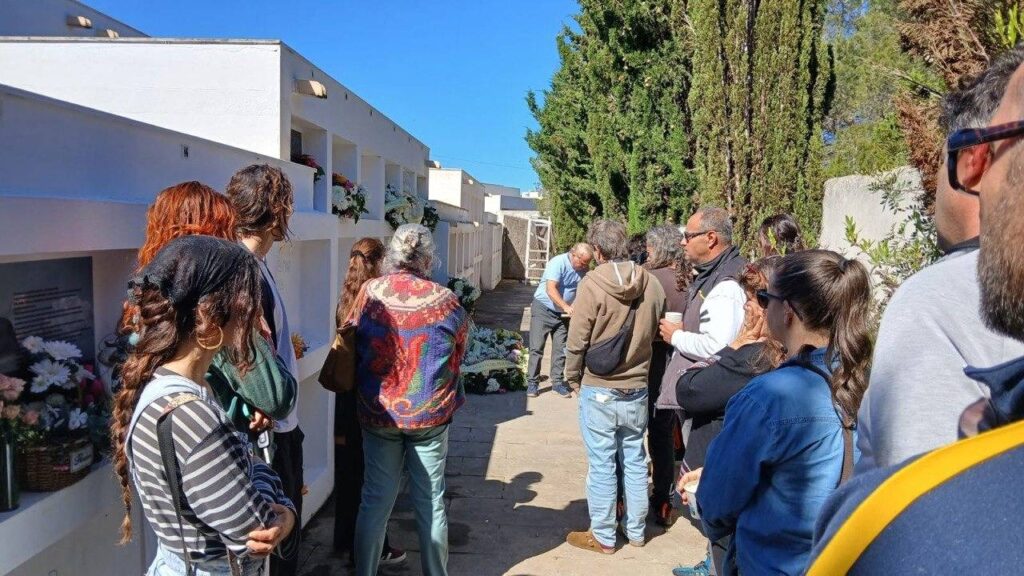
The cemetery of Formentera is filling up with nameless graves. And this is no exception: it is the reality that other border territories have known for years, Andalusia, the Canary Islands, Ceuta, Melilla, Murcia, Valencia. Since 2025, the Balearic Islands have been receiving bodies on their shores almost every month. Many of them will never be identified.
The route to the Balearic Islands has become the most dangerous stretch of the western Mediterranean, denied and made invisible by institutions for years. A route that also has a distinctive feature: the arrivals of people from the Horn of Africa, mainly Somalia, but also Sudan and South Sudan, turning Algeria into a transit country for those coming from eastern, western and Sahelian Africa.
The authorities must ask themselves whether these shipwrecks could have been prevented and open investigations to guarantee the right to life at sea. Until that happens, cemeteries will continue to fill with nameless graves, and families will continue not knowing that this was the end of the people they are searching for. In a context where hate speech seeks to erase and make invisible the victims of borders, the fact that civil society organises itself to accompany the dead is also an act of resistance and of repair.
That pregnant woman had a life, she had a name, she had people who love her and who are looking for her today. Meanwhile, in Formentera, a date written on a grave says that someone was there. And that she was not invisible to everyone.