Pain at the Ceuta border

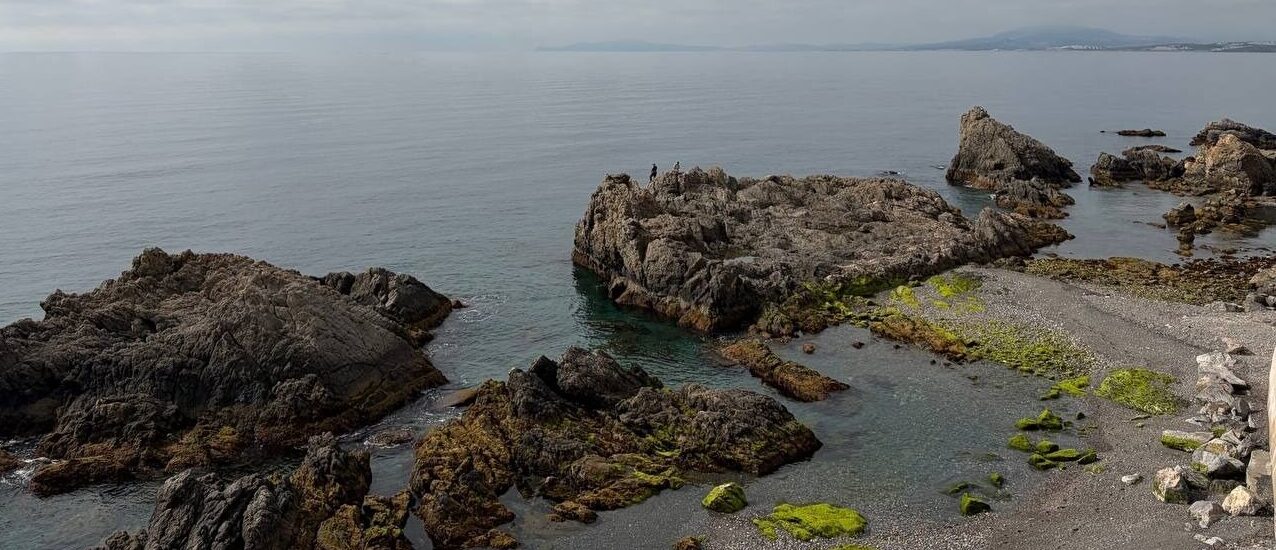
Thousands of people attempted to cross the maritime border separating Ceuta from Morocco. They did so by swimming, in extreme conditions, many of them without adequate equipment, risking their lives on an increasingly deadly crossing.

The confirmed death toll as of 1 August 2026 is devastating: 84 people have lost their lives. 67 on the Ceuta side. 17 in Fnideq. Dozens more people remain missing.

At Caminando Fronteras, we have spent years documenting what happens at this border. We know that those who attempt to cross the sea at Ceuta are, in their majority, young people, many of them minors, making the situation of children particularly worrying. The victims are not an anonymous mass; they are people with names, families, stories and dreams.

We also know that many of those who have died are buried in cemeteries without their families being present, without identification, without the possibility of receiving a burial in accordance with their beliefs. The lack of political will to recognise the victims means that families face administrative obstacles that end up violating their rights.

This is not an unforeseeable situation — it is the consequence of years of migration policies that prioritise the control of migration flows over the protection of people. It is the result of dehumanising policies that treat migration as a bargaining chip and means of blackmail between States.

That is why, from Caminando Fronteras, we demand:

That procedures be guaranteed to allow families who are searching to find and identify their loved ones. Families cannot be left without answers. The State has the means to identify the victims; what is lacking is the political will to do so with urgency and transparency.

That the victims be offered a dignified burial and that their families be able to say farewell in accordance with their beliefs and religion. Dignity in death is non-negotiable. Every person who has died deserves to be buried in accordance with their family’s wishes and the dictates of their faith.

That the vulnerability of the families be taken into account in order to guarantee their rights and those of the victims. Many of the families searching for their loved ones do not have the resources to travel, do not have visas, and do not speak the administrative languages. Procedures must adapt to their reality, not the other way around.

Our thoughts are with the 84 people who have lost their lives, with those who are missing, and with their families. We stand with the mothers and fathers waiting for news. With the brothers and sisters who do not know whether their family member is alive. With the communities mourning their young.

No one should die for crossing a border.

Tarajal Massacre: Twelve Years On

People we knew alerted us to numerous injuries and deaths during an attempt to reach Ceuta via Tarajal beach.

Twelve years ago, on the morning of 6 February 2014, we received several calls that still echo in our memory. People we knew warned us of numerous injured and deceased individuals during an attempt to reach Ceuta via Tarajal beach.

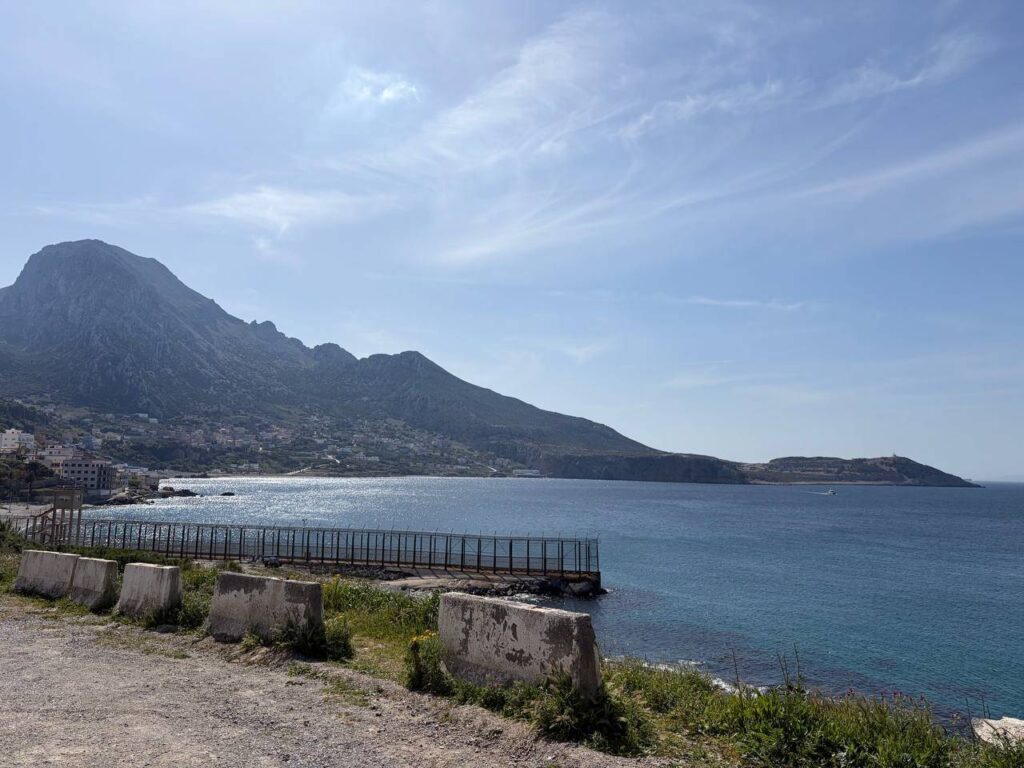
That morning, around 300 people tried to enter Ceuta by swimming around the breakwater separating the autonomous city from Morocco. The Guardia Civil, acting under orders from the Spanish authorities who had deployed to the area, began to use riot-control equipment against people who were in the water, trying to reach the shore. As a result of the disproportionate use of force by State security forces, 14 people lost their lives while attempting to reach the Spanish coast.

In addition, rescue resources were not activated to save those who were drowning, nor were the bodies recovered from the sea as they floated in the water. Humanitarian assistance during the massacre was provided by the companions of those at risk and by the Moroccan authorities. The 23 people who managed to reach the Spanish shore were subjected to summary pushbacks to Morocco.

From Caminando Fronteras, we immediately began a process of accompaniment for the families of those who died and for the survivors of the massacre. Dozens of survivors had to be transferred to hospitals in cities in northern Morocco. This accompaniment, sustained over time, continues to this day.

At the same time, we carried out an exhaustive investigation (only in Spanish) to gather evidence aimed at establishing responsibilities, as well as to collect testimonies from survivors—essential for reconstructing what happened and preserving the truth. We testified as witnesses during the judicial proceedings while data for the report was being compiled.

Faced with the abandonment of the judicial route and the lack of response from the justice system towards the families of the victims and the survivors, we have sought other paths to justice and reparation through awareness-raising and advocacy. Families have organised themselves, created an association, and transformed their pain into a collective struggle for justice—walking together, supported by one another, to denounce police violence and the killing of their loved ones. This story of resistance, dignity, and memory is documented in the Caminando Fronteras film Tarajal: Transforming Pain into Justice.

We work in alliance with other organisations to prevent this massacre from being forgotten. Every year, we participate in and support acts of remembrance and commemoration for the victims, convinced that memory is itself a form of justice.

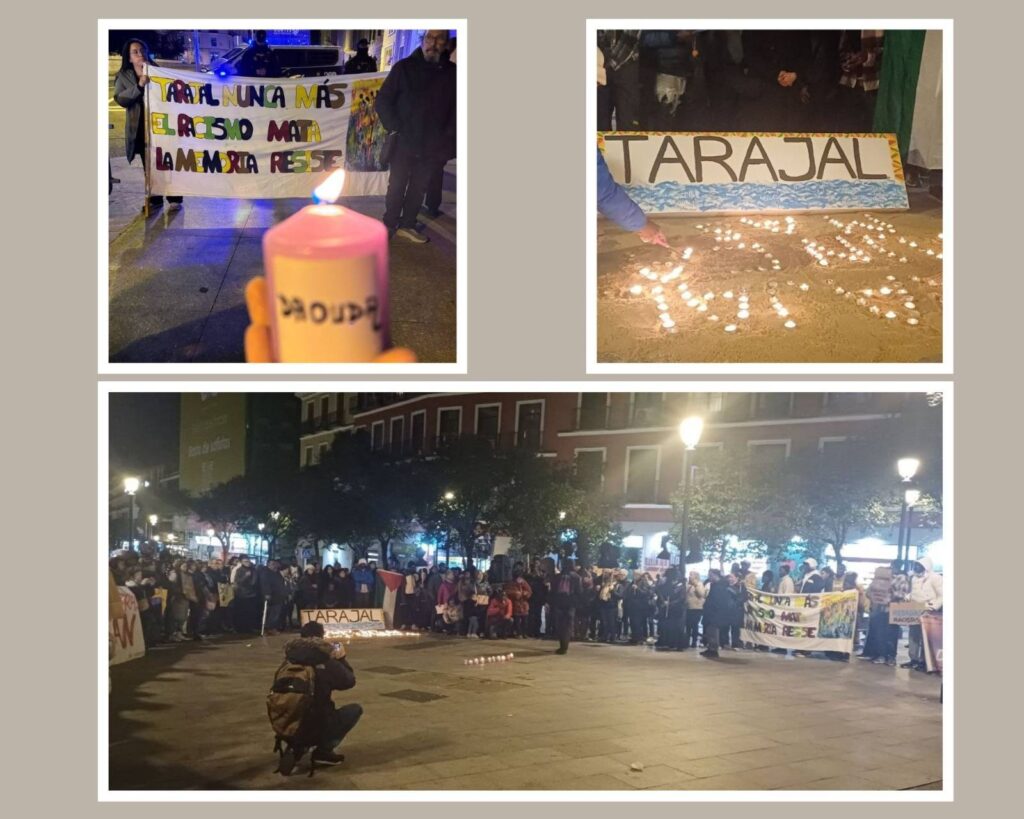
Twelve years later, on 6 February at seven in the morning—the exact time when shots were fired at people swimming towards the shore—we gathered in front of the Spanish Parliament. During the event, audio recordings made on Tarajal beach that day were played. We closed the gathering by naming each of the fourteen victims and lighting a candle with their name, as a gesture of memory, respect, and dignity.

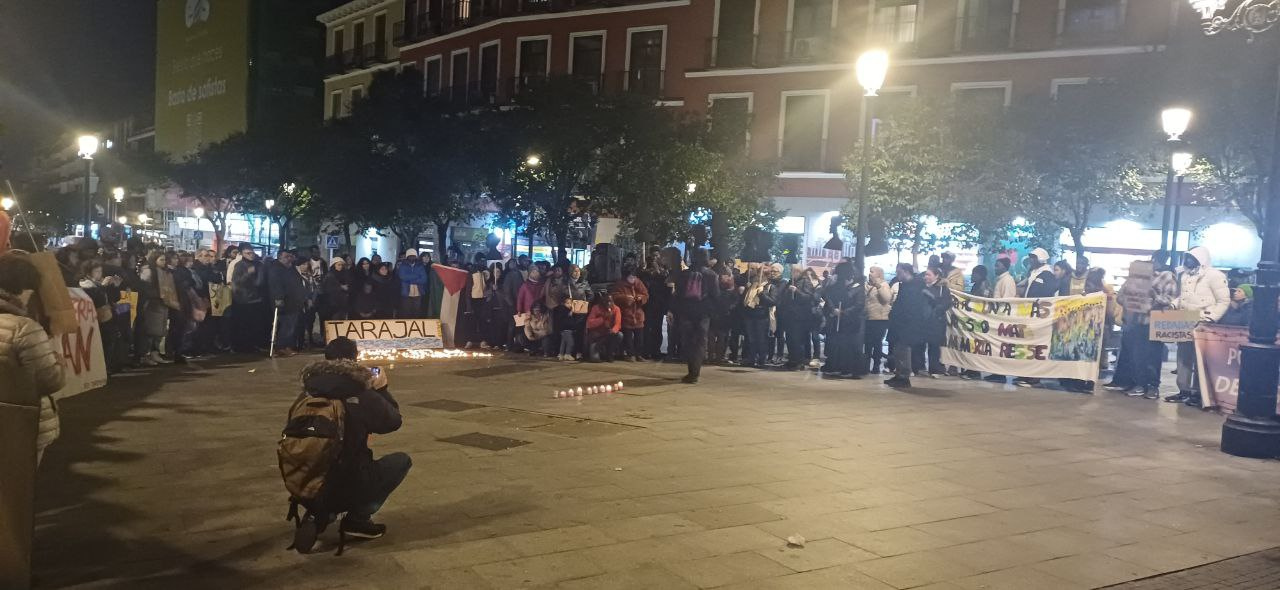
In the afternoon, we repeated the tribute in Lavapiés Square, in Madrid. Chanting “Tarajal, never again”, we continued to remember the violence and to denounce how institutional racism kills at the borders.

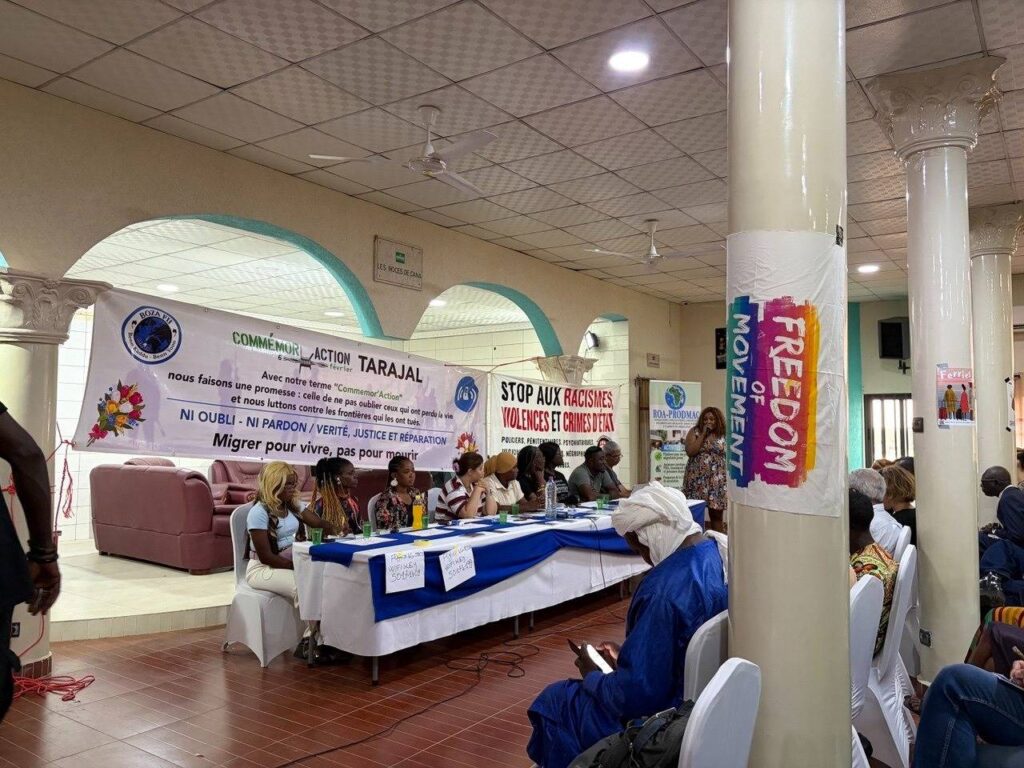
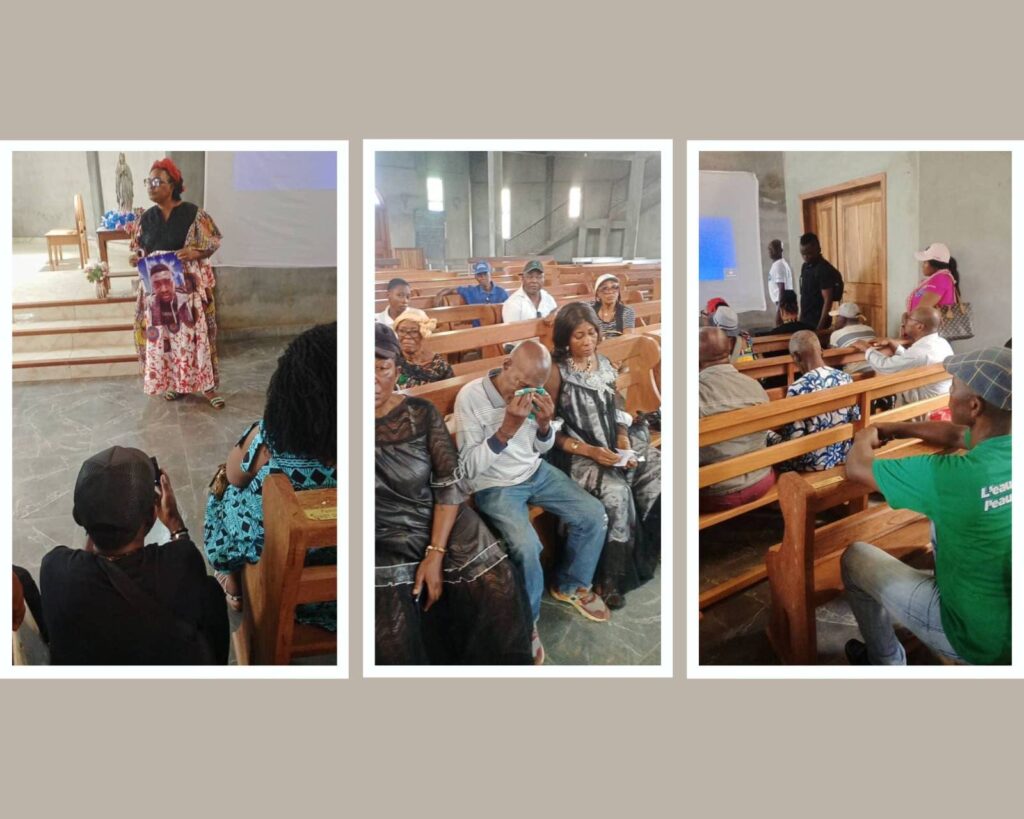
That same day, the Association of Families of Tarajal Victims in Cameroon gathered in Edea to demand justice, memory, and reparation. To this day, those who died and were buried in Ceuta—whose bodies were carried to the shore by the waves—remain unidentified, denying their families the right to truth and justice. Nameless graves persist, despite the fact that the authorities had the capacity, information, and means to identify them from the very beginning. This constitutes a further revictimisation of the families.

The gathering in Edea brought together not only families of Tarajal victims, but also families of other border victims. Their shared goal is to promote the recognition of 6 February as the International Day of Border Victims. The Tarajal massacre marked a turning point in Europe’s policies of death, exposing how border externalisation and migration control have been systematically prioritised over the right to life and human rights.

6 February seeks to honour the families’ struggle as a horizon of resistance; to be a day of tribute to those who defend life in border territories; and to stand as a day of memory, denunciation, and remembrance for all victims of all borders.